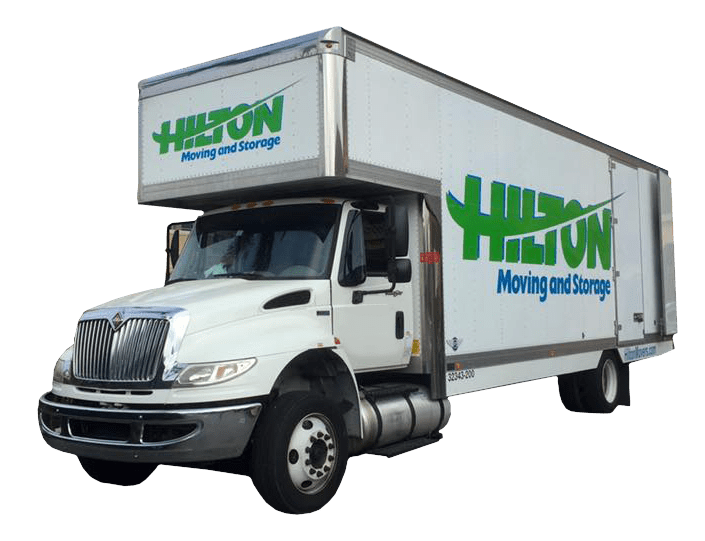
Ask most people what a moving company does and they will describe moving day: a truck, a crew, furniture going from one house to another. But for a lot of Naples businesses, the more valuable half of what we do never involves their office at all. It happens inside a warehouse.
Commercial warehouse storage is one of the least understood services in the moving industry. Business owners search for storage, find rows of self-storage facilities, and assume that is the only option — renting a unit, hauling their own inventory back and forth, and managing the whole thing themselves. There is another model, and for many businesses it is a better fit. This article explains how warehouse storage through a moving and storage company actually works, and which Naples businesses tend to use it.
Warehouse storage vs. self-storage: two different services
The difference comes down to who does the work and who watches your goods.
With self-storage, you rent empty space. You transport your items, you load the unit, you keep the key, and you come back whenever you need something. The facility provides walls and a door; everything else is on you.
Warehouse storage through a moving company flips that. At Hilton Moving and Storage, our crew picks up your items, inventories every piece, transports them to our warehouse, and stores them inside our building. When you need something back — one pallet or the whole lot — you schedule a delivery and our crew brings it to you. There are no rental units, no gate codes, no customer access hours, because customers do not come to the warehouse at all. Your goods are received, safeguarded, and delivered by our staff from start to finish.
For a business, that difference is not small. It means nobody on your team spends Tuesday afternoon shuttling boxes across town, and it means every item that enters or leaves storage is logged by a professional crew rather than remembered by whoever made the last trip.
What the warehouse itself looks like
Our warehouse is a single 30,000 square foot climate-controlled building at 3500 Shearwater Street in Naples. Climate control matters more in Southwest Florida than almost anywhere else in the country. Heat and humidity are hard on furniture, electronics, paper records, fabric, and finishes. A non-climate-controlled space in Collier County can swing through conditions that warp wood, rust metal, and invite mold. A climate-controlled warehouse holds a steady environment year-round, including through the summer months when outdoor humidity does its worst.
Inside, commercial goods are stored inventoried and organized, so a specific item can be located and pulled without unstacking a season’s worth of deliveries to find it.
Who uses commercial warehouse storage in Naples
Over the years, a few types of businesses have made warehouse storage a regular part of how they operate:
Interior designers
Designers working on Naples and Marco Island projects often have furniture arriving from a dozen vendors over several months, while the home itself is not ready for any of it. We receive those shipments at the warehouse, inspect them for damage, store them, and deliver everything to the site when the project calls for it.
Offices in transition
A company moving between offices rarely has the new space ready the same day the old lease ends. Warehouse storage bridges the gap: desks, files, and equipment come out of the old office, sit safely in storage for weeks or months, and arrive at the new space on schedule. The same applies to businesses downsizing their footprint who are not ready to part with furniture they may need again.
Contractors and builders
Builders working in communities like Pelican Bay, Pine Ridge, and Lely Resort use receiving and storage for fixtures, appliances, and finish materials — items that are expensive to replace and vulnerable sitting on a job site. Deliveries come to the warehouse, and materials go out to the site when the schedule is actually ready for them.
Hotels and retailers
Hotels renovating in phases need somewhere for furniture from the floors under construction. Retailers need somewhere for seasonal fixtures and overflow inventory. In both cases, warehouse space a few miles away that comes with its own delivery crew beats cluttered back rooms and borrowed corners.
How the process works, step by step
1. The conversation. It starts with what you have, how long you expect to store it, and how often you will need things back. A designer with weekly deliveries has a different rhythm than an office storing furniture for six months, and the plan reflects that.
2. Pickup or receiving. Either our crew picks up from your location, or your vendors ship directly to our warehouse. Direct receiving is common for designers and contractors — it means your shipments have a professional dock to arrive at instead of a job site or a storefront.
3. Inspection and inventory. Everything is checked in and inventoried as it arrives. If a vendor shipment shows up damaged, you find out then — while a claim is still simple — not months later when the piece is finally unwrapped on site.
4. Storage. Items are stored in the climate-controlled warehouse, organized so they can be retrieved individually.
5. Delivery on your schedule. When you need items, you schedule the delivery and our crew brings them to your office, site, or project. Deliveries and moves run Monday through Saturday.
Storage during a renovation or buildout
One more situation deserves its own mention, because it comes up constantly in Naples: the renovation. When a business renovates its space — a restaurant refreshing its dining room, a professional office redoing its suite, a shop rebuilding after storm damage — everything inside has to go somewhere, and it has to come back in working order.
Renovation storage through a moving company solves both halves of that problem. Our crew packs and moves the contents out, stores them in the climate-controlled warehouse for the length of the project, and moves everything back in when the contractor hands the space over. Because the same company handles the move-out, the storage, and the move-back, nothing falls between the cracks — the inventory from move-out day is the checklist for move-back day.
The climate control matters double here. Renovation timelines slip, and “six weeks” of storage has a way of becoming four months. Furniture and equipment that would have survived a few weeks in a hot garage will not enjoy a Naples summer there. In the warehouse, the timeline can slip without the goods paying for it.
Questions business owners usually ask
Can I visit my items?
Our model is built around delivery rather than visits — that is what keeps the warehouse secure and the inventory accurate. If you need something, we bring it to you. Most businesses find this is the point: the storage runs itself, and nobody on staff has to go anywhere.
Is there a minimum or maximum?
Commercial clients range from a few items to full office contents. The right way to find out if your situation fits is a quick conversation about what you have.
What about our regular moving needs?
Storage and moving come from the same crew and the same building, which is the advantage of doing this through a moving and storage company. The team storing your inventory is the same team that can handle your office move, your new location setup, or a single heavy delivery across town.
Why businesses pair storage with a moving company
The practical answer is that storage almost always has moving attached to it. Items have to get to storage and back out again, and when the storage provider owns that transportation, one phone call covers the whole loop. There is no coordinating between a storage facility, a freight company, and your own staff — one company is responsible for the goods the entire time, and one inventory tracks them.
Hilton Moving and Storage has been serving Naples since 2010, and our ownership brings 35 years of experience in the moving industry. Local businesses across Naples, Marco Island, Bonita Springs, Estero, and Golden Gate use our warehouse as an extension of their own space — some for a single bridge month, some as a standing part of how they operate.
See if warehouse storage fits your business
If your business is short on space, mid-transition, or tired of managing a self-storage unit nobody has time to drive to, it is worth a conversation. Tell us what you store, what arrives and leaves, and what your next few months look like — we will tell you honestly whether our warehouse is the right tool for it.
Call (239) 231-7050 or email info@hiltonmovers.com to request a free estimate for commercial storage or receiving.